Science
Explore and share tips, strategies, and resources for helping students develop in science.
Podcast: The Extraordinary Impact of Drawing to Learn
In Selim Tlili’s high school classroom, sketching isn’t about artistic ability. It’s a simple—but powerful—tactic for boosting student recall and comprehension.
22.6kYour content has been saved!
Go to My Saved Content.Exploring Before Explaining Sparks Learning
New elementary science teachers can build student engagement and enhance learning by using the explore-before-explain approach.Your content has been saved!
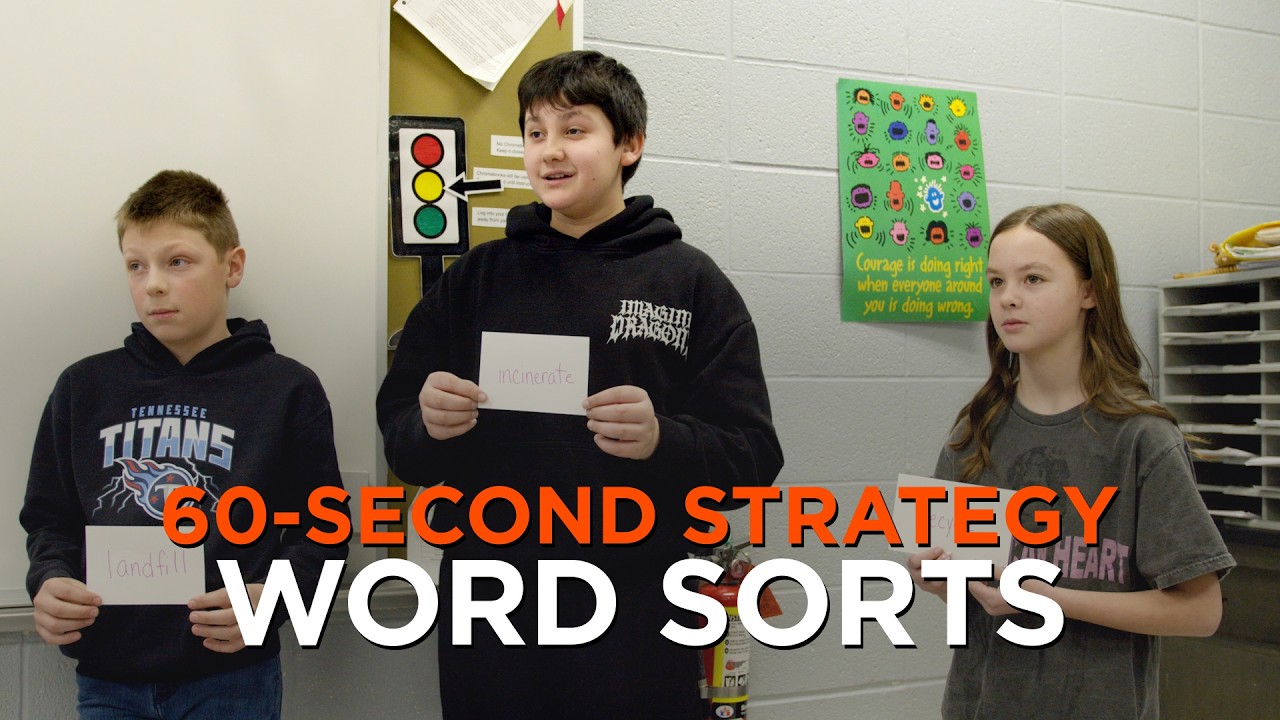
Go to My Saved Content.60-Second Strategy: Science Word Sorts
A flexible warm-up where students work together to group related vocabulary words or concepts can cement their understanding—and help teachers assess prior knowledge.Real, Fake, or Deepfake? This Lesson Helps Students Decide
Students examine videos and online information to investigate what is real and what is not in this engaging lesson.110.7kYour content has been saved!
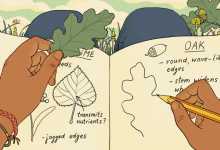
Go to My Saved Content.Teaching Scientific Thinking With a Good Old-Fashioned Notebook
Middle school students can build essential science skills by recording their observations, their questions, and their findings—all in one place.2kYour content has been saved!
Go to My Saved Content.Building Scientific Thinking in Middle School With a 10-Minute Bell Ringer
When you give students the opportunity to build the same science skills day after day, they start thinking like scientists.
Why Students Should Write in All Subjects
Writing improves learning by consolidating information in long-term memory, researchers explain. Plus, five engaging writing activities to use in all subjects.378kYour content has been saved!
Go to My Saved Content.A First-Week Routine That Gets Middle School Students Thinking Like Scientists
Here’s a day-by-day plan for guiding your students to start the year by asking questions. Just resist the urge to answer them.7.7kYour content has been saved!
Go to My Saved Content.Designing Science Inquiry: Claim + Evidence + Reasoning = Explanation
The Claim, Evidence, Reasoning framework is a scaffolded way to teach the scientific method.596.8kYour content has been saved!
Go to My Saved Content.Building Students’ Scientific Skills Through Observation
Feathers provide students the opportunity to explore how the particular form of an object impacts its function.3.2kYour content has been saved!
Go to My Saved Content.Why Kids Should Nature Journal at All Grade Levels
A 2023 review makes a strong case that hands-on observation of natural phenomena has both academic and psychological benefits.Teaching the Concept of Equity Through Gardening
Plants can illustrate how different people need different things to be nourished—and how equality and equity differ.192.2kYour content has been saved!
Go to My Saved Content.Moving Beyond Traditional Lab Reports in High School
A teacher who wanted to shift from assessing compliance to assessing students’ thinking shares the tweaks she made in her assignments.Helping Students Look Beyond Grades With Visual Rubrics
When students see their content mastery mapped out, they’re more likely to understand their proficiency—and take ownership of their progress.Reducing Homework by Ensuring That More of the Learning Happens in Class
For a high school physics teacher, assigning less homework meant comprehensively revamping assessments and how each class session was set up.10.2kYour content has been saved!
Go to My Saved Content.