Building Prewriting Skills in Pre-K Through Movement and Play
Before kids can successfully grip a pencil, they need to strengthen gross motor skills—and these activities are a good way to do that.
Your content has been saved!
Go to My Saved Content.
A child sitting at a desk, pencil in hand, tracing over worksheets and patterns. This is often what we think of when we think about prewriting skills—fine motor development and activities that include small, precise movements and pen grip.
However, before children can successfully hold a pen using a tripod grip, they first must build a strong foundation of gross motor movement by strengthening larger muscles, such as core, shoulders, arms, and wrists.
Recent research highlights the important role of prewriting skills as the foundation for successful writing development in young children. When children run, jump, climb, and engage in activities that work their gross and fine motor skills, they are also improving their posture, core strength, and body awareness. Without these, children will be unable to hold themselves up on a chair, hold a pen in a comfortable tripod grip, and begin to write.
For my youngest learners, I try to provide a range of fun, hands-on, engaging activities that promote prewriting skills and large muscle development. Classroom-based research demonstrates that children who engage in activities that promote prewriting skills show higher ability in more formal writing abilities when they enter kindergarten.
Shoulder Stability: The Foundation for Control
The shoulder is a key joint in the development of prewriting skills. It acts as the stable base from which the arm, wrist, and hand can move. In early stages of development, it is the muscles in the upper body that are used to help the hands grip tools. If a child lacks shoulder stability, they may compensate by using excessive movement in their wrist or fingers, leading to inefficient or awkward pencil control.
My favorite shoulder-strengthening activities include:
- Painting windows.
- Washing painted windows with soap and sponges.
- Digging in the sand and soil.
- Pushing and pulling heavy objects. (Old tires, if you can get some, can be a great workout for young children.)
- Building and completing obstacle courses.
- Floor and tunnel play. (Not just for babies!)
Elbow Pivot, Arm Strength, and Coordination
Children who have a good range of movement in their upper back and shoulder area will then typically move into developing their elbow pivot. In parallel, strengthening their arm muscles will allow them to control their movements with greater ease. Writing requires sustained effort, and children with limited arm strength may become fatigued quickly, leading to disengagement or avoidance.
These are some of my favorite activities for developing children’s arm strength:
- Drawing and painting on vertical surfaces.
- Balloon volleyball.
- Building dens with sticks.
- Washing toys and baby clothes in a water tray and hanging them on a line to dry.
- Scooters and hoops: One child sits on a floor scooter, while another child pulls them along. This is a great workout for both children!
A particular favorite activity that promotes arm and core strength is drawing on the floor. First, I roll out a long piece of paper on the floor. One child lies on their tummy, with a chunky crayon in each hand (using whatever pen grip their development currently allows). A second child holds their feet and drags them across the paper as they draw! The children in my class love this—they could do it for hours.
Wrist Strength and Flexibility
For effective writing, the wrist needs to be both stable and flexible. A weak or overly rigid wrist can limit a child’s ability to control a pencil and form letters accurately. Developing wrist strength involves activities that encourage bending (flexion), straightening (extension), and rotation. These activities will often require a smaller space than shoulder and elbow work.
Here are some of my favorite wrist-strengthening activities:
- Playing with Play-Doh or clay (rolling, squeezing, flattening).
- Pushing loose items into Play-Doh and pinching them out (things like beads, pipe cleaners, and googly eyes).
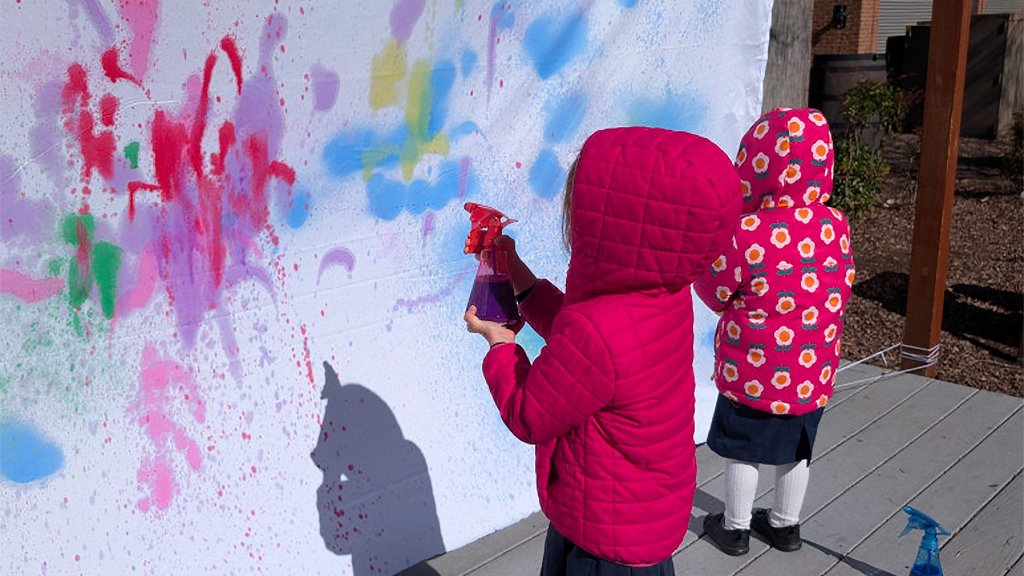
- Using spray bottles or water squirters; filling these with watered-down paint and spraying onto a large white sheet turns this activity into a fun art project as well.
- Turning doorknobs, twisting lids, or using tools like screwdrivers (under supervision).
- Using cotton swabs to paint with (even better if they are cut in half).
The most popular activity in my class to support wrist pivots and finger strength is a game in which they use their fingers to “kick” a mini-soccer ball.
These activities not only strengthen the wrist but also improve attention, coordination, and control, setting the stage for more precise hand movements.
Low-Load Activities
Low-load activities are tasks that involve minimal resistance or weight but still provide valuable opportunities for muscle development and coordination. They are great for reluctant mark-makers and remove the need for more traditional writing tools, such as paper and pens. These activities are particularly important for younger children or those who may not yet have the strength or confidence for more demanding tasks.
This year, our preschool students enjoyed dancing with lightweight scarves, which encourages large movements that can help them develop their wrists and larger arm muscles. (There are lots of scarf dances on YouTube that the children can follow along with.)
Sensory play is vital in an early-years classroom, and it lends itself easily to being incorporated into mark-making and developing overall muscle strength. My students enjoy drawing in colored salt, using sticks to draw and write in mud and sand, and playing with a tray of shaving cream. These activities focus on movement and exploration rather than precision, allowing children to develop control in a relaxed and engaging way.
Building Strength Through Play
By providing opportunities for active play, teachers can support physical development and prewriting skills in a way that feels enjoyable rather than structured or repetitive. Outdoor play is particularly valuable, as it offers a wide range of opportunities for large-scale movement. Activities such as digging in sand, building with large blocks, or navigating obstacle courses all contribute to the development of strength and coordination, which ultimately benefits handwriting. Prewriting skills are built from the shoulders down to the fingers, and these foundational skills enable children to approach writing with confidence, control, and endurance.
By incorporating a balance of high-energy, strength-building activities and low-load, exploratory experiences, teachers can create a supportive environment that nurtures prewriting development.