Practicing Sight Words With the Help of Ice Cream Cones
Early elementary teachers can use this activity to involve students and their families in an engaging literacy routine.
Your content has been saved!
Go to My Saved Content.
When I first started teaching kindergarten, I worried about my students’ reading progress. Many students struggled to recognize basic sight words and grew frustrated at how they needed to slowly sound things out. I knew that if my students couldn’t quickly recognize common words, it would be much harder for them to focus on the text.
Common words are more likely to stick when students are repeatedly given opportunities to connect sounds to spelling patterns. This process, known as orthographic mapping, allows students to instantly recognize words instead of pronouncing them every time. As a result, students are better able to understand what they’re reading.
I wanted my students to do more than understand—I wanted them to enjoy the act of reading. It was important to me that they could immerse themselves in stories. To make sight word practice engaging and also build consistency at home and at school, I came up with a simple, highly motivating literacy routine. Fourteen years later, I no longer teach kindergarten (I’m a dyslexia interventionist), but the kindergarten teachers at my school still utilize the same routine, which is incredibly special for me to witness.
The Ice Cream Sight Word Routine
The first step of the literacy routine is to create a colorful bulletin board, which I nicknamed “Scoopin’ Up Sight Words.” Each student gets an “ice cream cone” to display on the board. To keep things organized, each cone is labeled with a number, and students are tasked with learning which one is theirs.
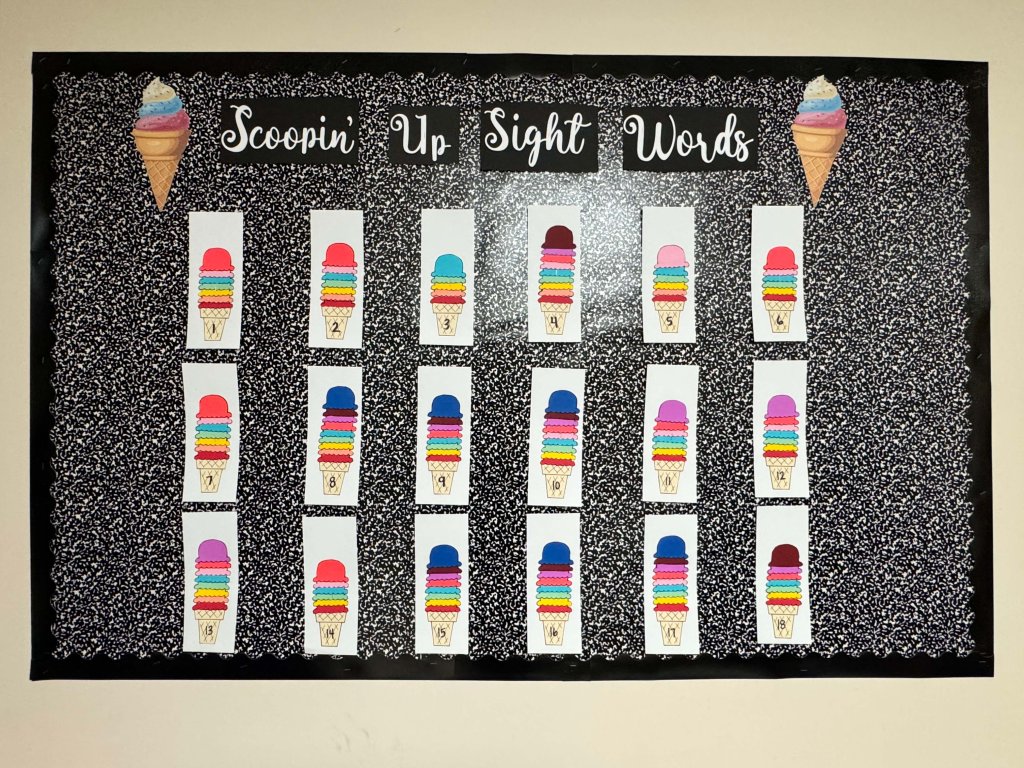
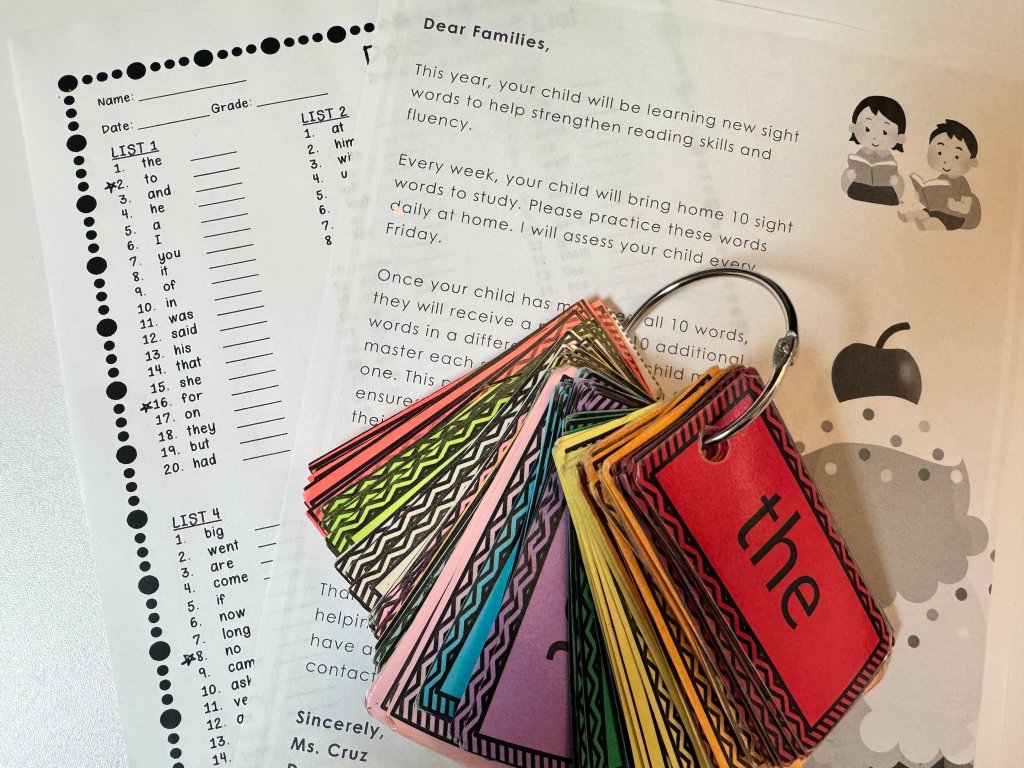
Students practice a set of sight words at home and in class, and then once they feel ready, they complete a short mastery check. Teachers take out a matching set of sight word cards and flip through them like flash cards to see how quickly and accurately students can read each word. If they can read the words automatically and without hesitation, they earn another “scoop” on the bulletin board and move on to the next set. If not, they keep practicing the same words and try again the following week. When I taught kindergarten, I often jotted down words that my students missed, so that families could keep practicing at home.
The system works because it’s simple and consistent. The laminated sight word cards are easy for students to flip through independently, and parents appreciate having a clear way to assist with reading practice. In fact, many families are active partners in the learning process. The first time I printed and laminated materials, several parents volunteered to cut the cards, which made preparing the word sets much more manageable and much less time-consuming. Most important, year after year, students love watching their cones grow taller.
Adapting for Different Learners and Celebrating Success
“Scoopin’ Up Sight Words” is very flexible—it can be adapted for a variety of learning needs. Some students benefit from additional repetition or smaller word sets before they move on to the next level. Other students rapidly move through the lists and appreciate the challenge of adding more scoops to their cones.
I recommend adjusting the routine to meet students where they are; for students who need more support or may not be practicing as much at home, I sometimes reduced the number of words in a set so that they could still experience success and build confidence. I’d also recommend keeping the focus on personal growth, rather than comparison. I liked to remind students that everyone moves at their own pace. While the routine can feel motivating and even a little competitive, it often leads to collaboration. I’ve seen students encouraging one another and even practicing together during recess.
Though individual students’ mastery of sight words may vary, everyone in the classroom gets better. I remember one kindergarten student of mine who really struggled at the beginning of the school year—so much so that she tried to avoid reading during small group time. As the weeks went by and she kept practicing her sight words, she slowly became more confident and eventually started volunteering to read during mastery checks. I’ve loved hearing similar stories over the years from other kindergarten teachers at my school.
To put a cherry on top of the routine, our kindergarten team holds a sight word spelling bee and a celebration at the end of the school year. Each class selects a few students to participate in the spelling bee, which is run in rounds like a traditional spelling bee. The spelling bee quizzer announces a word, then the student must say the word, spell the word, and repeat the word.
Teachers recognize students for their effort and growth, and they keep the experience positive and encouraging for everyone. There are first-, second-, and third-place winners, along with small bee-themed trophies that make the moment extra special.
Afterward, the celebration includes a small ice cream social in the cafetorium. Families are invited to attend, and teachers take time to celebrate all of the progress that students have made with their sight words throughout the year.