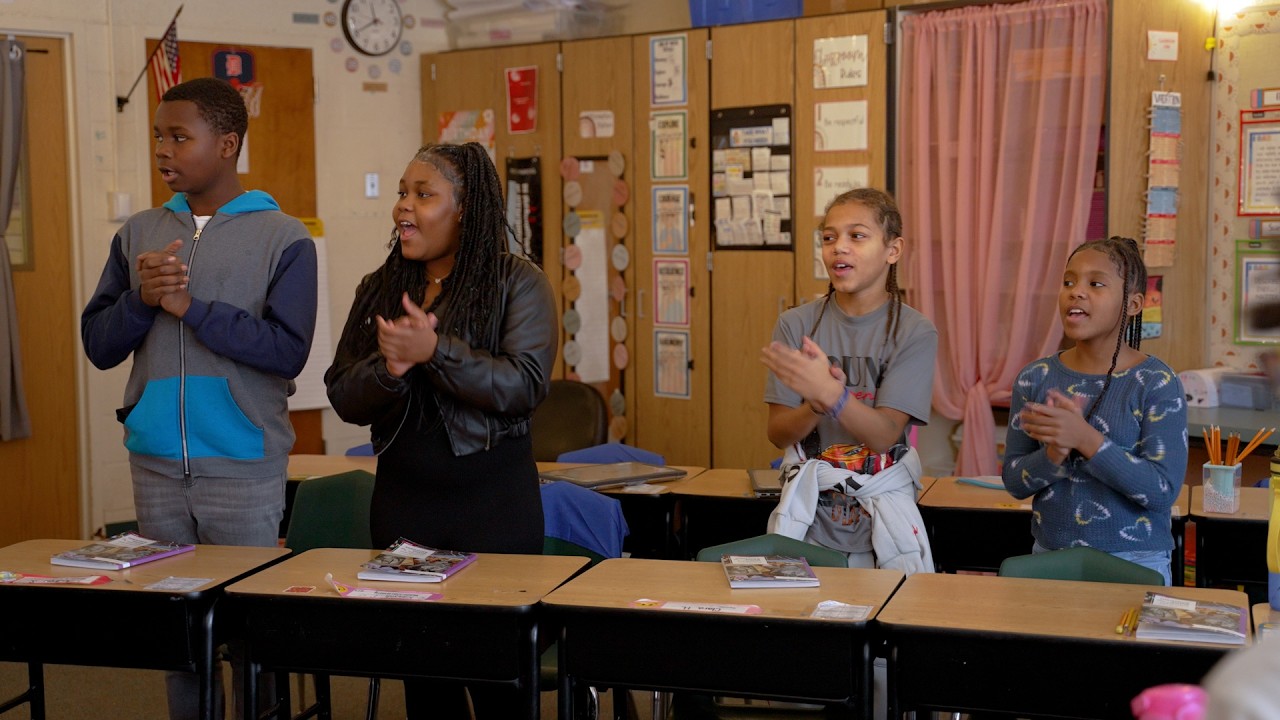
Teaching Strategies
Discover best practices for improving your teaching craft.
9 Strategies for Tackling Student Work Refusal
Teacher-tested tactics to get learning back on track when students refuse to do the work.Integrating Music and Art in Elementary School ELA
These strategies help upper elementary students strengthen their visualization skills and understanding of story elements.Your content has been saved!
Go to My Saved Content.Why Movement Matters in Math
These strategies for building controlled movement into learning can help middle school math students stay focused and engaged.Your content has been saved!
Go to My Saved Content.A More Efficient and Productive Way to Conduct Math Assessments
Here’s how to assign graded work that more accurately assesses elementary students’ learning and saves time.Your content has been saved!
Go to My Saved Content.60-Second Strategy: Waterfall Reading
This choral reading activity builds fluency and confidence, especially for students who feel overwhelmed at the prospect of reading out loud alone.103.8kYour content has been saved!
Go to My Saved Content.How Movement and Repetition Help Vocabulary Stick
A daily routine that combines visual, auditory, and kinesthetic inputs helps students learn new words, recognize them when reading, and remember their meanings.15 Ways to Use Novelty to Boost Student Engagement
These activities give teachers opportunities to present students with learning experiences that pique their curiosity.Making Math Review a High-Energy Game
In the 100 Squares Challenge, math review takes the form of friendly—but fierce!—competition, inspiring students to complete problems under pressure.23 Bell Ringers Teachers Love
We asked teachers for their favorite ways to start class. Nearly 400 responded—here are some of their best ideas.
How Learning Happens: Instructional Shifts
Dig into our collection of classroom practice videos grounded in the science of learning and find something to try in your own instruction—it could have an outsized impact on your students’ learning.419.6kYour content has been saved!
Go to My Saved Content.Podcast: The Extraordinary Impact of Drawing to Learn
In Selim Tlili’s high school classroom, sketching isn’t about artistic ability. It’s a simple—but powerful—tactic for boosting student recall and comprehension.
22.4kYour content has been saved!
Go to My Saved Content.15 Effective Ways to Manage Dysregulated Students
Teachers are seeing more big emotions and disruptive behavior in early elementary classrooms. These practical strategies can help youngsters reflect, reset, and repair.Which Reading Strategies to Try, and Which to Ditch
Research shows that some popular activities for reading instruction don’t actually result in more fluent readers—so we rounded up the most classroom-worthy ones.1.8MYour content has been saved!
Go to My Saved Content.A Versatile Seating Arrangement That Really Works
Placing students in strategic academic groups at L-shaped tables creates classroom community, improves teacher mobility, and supports struggling students.70.4kYour content has been saved!
Go to My Saved Content.60-Second Strategy: Mystery Number
Starting class with this fun math review activity gets students out of their seats, boosts their problem-solving skills, and promotes collaboration.