Building Empathy Through Haiku
Elementary students can develop their listening and literacy skills as they learn to write concise, expressive poems.
Your content has been saved!
Go to My Saved Content.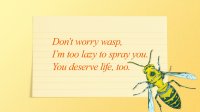
Earlier this school year, I worked on a special writing and emotional-literacy skills project with my students and another third-grade class. The goal was to introduce the students to haiku poetry and hopefully inspire them to write and submit a poem to an annual writing competition run by Young Poets, an organization in Idaho that publishes elementary school student haiku. Last year, 13 of my students were selected and became published writers, between the ages of 9 and 10. This year, I was hoping for even more student writing success.
Help Students Get to Know Haiku
I started the first 15 minutes of the morning meeting with both classes combined. Each day, we read and discussed a different haiku poem by famous Japanese masters and some modern American writers. Doing this helped build a community between the two classes as well as developing speaking and listening skills as children discussed what they observed in the poems.
The students most responded to the more amusing poetry by 19th-century Japanese master Kobayashi Issa. The poems that we discussed presented traditionally unlikable animals such as fleas, mosquitos, snails, and flies in empathetic and human-like situations, inviting us to realize how alike we are. This helped us develop our empathy skills and was a powerful link to our literacy curriculum where both classes were observing character perspective in fiction.
Writing Haiku From First to Final Draft
Haiku is a unique Japanese form that, in English, is presented in three lines of usually no more (and often less than) 17 syllables. The emphasis is on presenting two images that can either complement or contrast each other, and so provide a window into a deeper appreciation of the natural world.
I created a planning frame that required each student to choose an animal that they found unlikable and/or disgusting. The planning frame helped direct the students into empathizing with their chosen animal and finding similarities between their own lives and needs with the animal’s. After all, all animals need a home, have families, desire food and shelter, want to live and thrive. The planning took one 30-minute session to complete. While I worked with my colleague’s class on the same skills, she worked with my class to teach them how to research a photograph of their animal and create a watercolor painting for a shared display.
Developing ideas into poems took three more 30-minute sessions. Writing haiku is much harder than it seems, as it is a challenge to try to capture two objective images in such a small amount of words. To model this poetry form for my students, I used the first line or initial words of Issa’s poems and replaced his animal with my chosen one—wasps.
Don’t kill a wasp!
They have a family
and a home, too.
For you wasp, too,
the winter is harsh, cold
and very lonely.
Don’t worry wasp,
I’m too lazy to spray you.
You deserve life, too.
I wrote three lines and then counted the syllables, careful not to exceed 17. Traditionally in Japanese, the structure is 5/7/5 syllables, but this isn’t a strict rule in English. That said, it serves as a helpful frame for students new to the form.
Most students wrote three lines with fewer than 17 syllables, so I was able to show them how adding a couple of adjectives improved the imagery and expanded the number of syllables. Many students needed several attempts to format their poem accurately in terms of basic writing conventions and also as a haiku poem. Once they did this, I had them write it neatly on plain white paper. Then I photocopied the poems, keeping one copy for a hallway display (along with the artwork they created), and I submitted the other copy to the writing competition. I gave my students the chance to opt out of submitting to the competition, but only one did. The rest were keen, and some even wrote a second haiku to submit.
The Short-, Medium-, and Long-Term Results
In the short term, my colleague and I got to know each other’s classes, which has improved grade-level relationships and social connections. My class benefited from extra art, and their resulting creatures made for a wonderful display. All of the students learned how to be more expressive and empathetic with a small amount of words.
After we finished the poetry, I noticed the children being more caring toward the small animals around them (worms, spiders, etc.). Because of this exercise, they argued for the careful removal of spiders from the classroom rather than following an instinctive desire to eradicate them.
Whether or not the third-grade students will have their poems chosen for publication will be decided much later in the year (announcement letters go out in the fall). I hope this experience will inspire them to return to poetry in fourth grade, just in time for their first literacy unit connected to studying poets and their art.
Below are examples of haiku written by some of the students in my class.
No! Don’t swat it!
Sorry for yelling. The earwig
only wants peace.
For you mosquito,
humans must be very harsh
just like cold winters.
Don’t worry spiders,
I’m too nervous to
squash you flat.
Don’t squash that tick!
It has loving parents
just like you.
Don’t worry rats,
these traps are too hard
to set up.