Supporting Students With Executive Function Challenges
A one-on-one intervention framework can help high school students with ADHD improve their executive function habits.
Your content has been saved!
Go to My Saved Content.
Approximately 11 percent of students carry a diagnosis of attention deficit hyperactivity disorder (ADHD), and when left unsupported, ADHD is linked to school failure, lower grades, higher dropout rates, and more in-school disciplinary challenges.
As an administrator who has watched students struggle with tasks that often ask them to shift between rules, hold information in their mind, and self-regulate all at once, I’ve come to see these moments not as behavioral problems but as executive function gaps—that is, differences in the brain’s cognitive management system that impact a student’s ability to follow through on what they already know how to do.
Students with ADHD are most likely not willingly choosing to leave work unfinished, fail to plan, or regulate their emotions. In those moments, for those tasks, their brains work against them. This distinction changes how schools should intervene.
From Executive Function Gaps to Targeted Support
When we think about executive function, “inability to focus” often comes to mind. Executive function spans six clusters of cognitive skills, and a student who appears unmotivated or unwilling is frequently a student with an underdeveloped skill in one of these areas—not a student who lacks the desire to succeed.
These ideas led our school to create academic coaching, a one-to-one, individualized intervention for high school students that builds strong executive function skills. The approach has three evidence-based parts: a prescribed intervention framework, fully individualized instruction, and consistent feedback loops with students and, when appropriate, their parents.
Teachers refer students who show difficulties with work habits or executive functioning. These skills matter for every student, and difficulties can arise whether or not a student has an identified disability. For that reason, our program does not require a formal diagnosis, individualized education program, or 504 plan for participation.
Before a student works with an academic coach, an executive function assessment—including a parent and student questionnaire along with classroom observation from teachers—establishes a starting point. Our program uses the Executive Skills Questionnaire—Teen Version, a free 33-item measure covering working memory, cognitive flexibility, metacognition, and response inhibition.
The special education director helps identify faculty and staff who could serve as academic coaches, and we schedule these sessions by matching student study halls with teachers’ schedules whenever possible. When schedules do not align, coaching takes place before or after school. In our program, academic coaches earn stipends for their work as well as receive training in executive function and research-based practices, including metacognitive questioning, modeling, positive self-talk, and structured explicit instruction.
This training happens during preservice professional learning days with ongoing follow-up and support throughout the school year and follows a six-step process:
- Identification: Coaches use observation and the Executive Skills Questionnaire—Teen Version with students, parents, and teachers to pinpoint situational and personal contributors to a student’s executive function struggles.
- Goal setting: Once the coach identifies the top three areas for support, they select one and, with the student’s input, set a SMART (specific, measurable, attainable, relevant, and time-bound) goal around that skill.
- Outlining a plan: The coach records the behavior’s frequency, situational triggers, and the classroom contexts where it shows up most, then identifies concrete action steps.
- Guiding and monitoring: The coach lists specific supports (featured below), enlists teachers to reinforce them in the classroom, and documents progress toward the target behavior.
- Prompting and praising: Coaches build intentional opportunities to prompt the targeted behavior and offer specific, genuine praise. Generic praise does little to move a student toward mastery.
- Reflection, evaluation, and revision: At the end of the initial time frame, the coach and the student evaluate progress, revise the plan as needed, and add new goals only once the student demonstrates mastery, to avoid overwhelming the student.
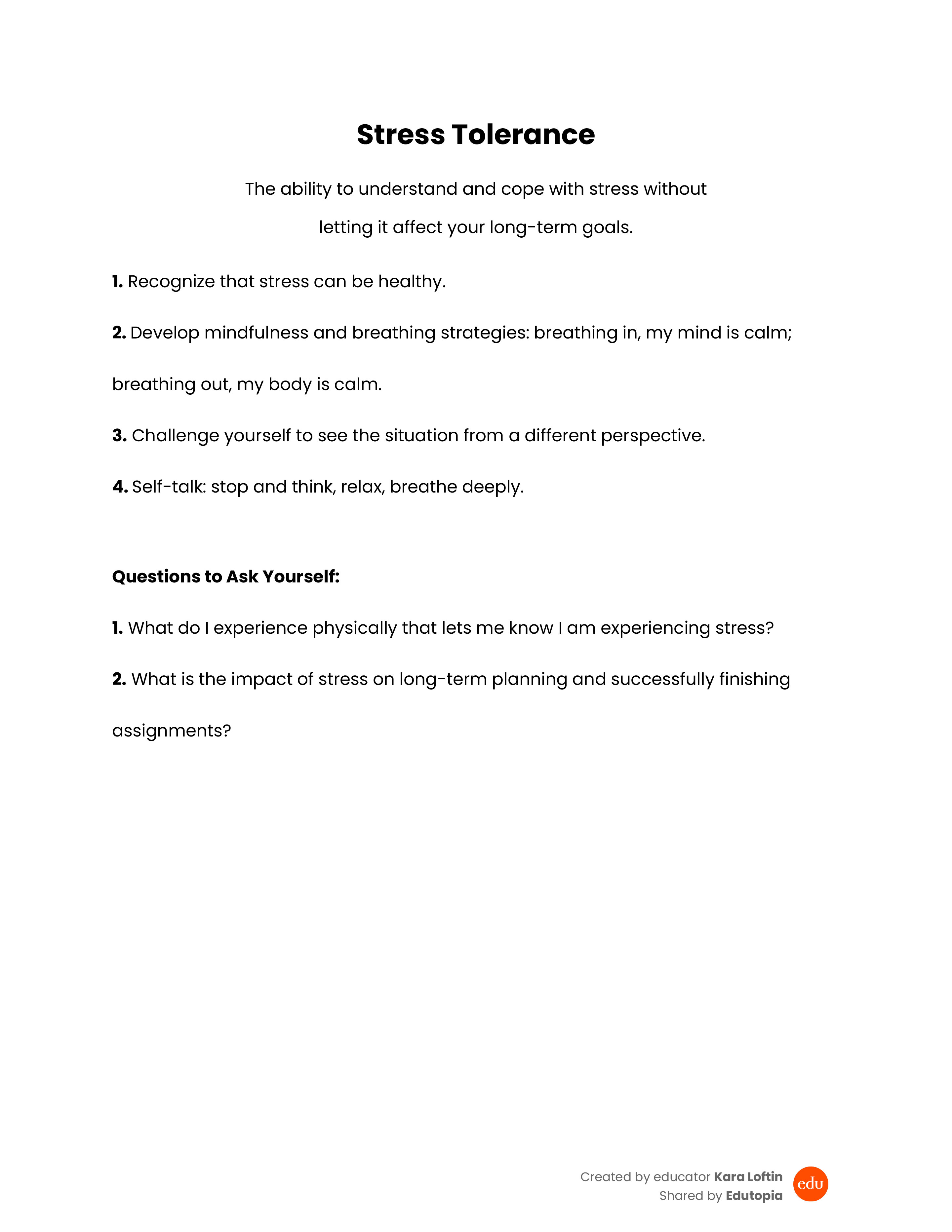
Throughout this six-step process, whenever possible and appropriate, coaches bring general educators, special educators, and administrators together to support consistent implementation of classroom scaffolding, such as breaking down tasks into smaller pieces or providing distraction-free testing environments.
Ideally, the frequency and length of coaching sessions reflect each student’s needs. In our school, scheduling often determined both: Students typically met with their coach for a full 60-minute study hall period one to three times per week.
This arrangement was largely logistical. Many students could have benefited from shorter sessions, especially as they gained independence. Coaches also check in with parents and teachers weekly to gauge how well current strategies are working and adjust accordingly. Most students remain in the program for one school year, though timelines differ depending on individual need.
Extending the Impact of Executive Function Coaching
One student, Ian, a freshman with dyslexia and ADHD, illustrates the model’s potential. Ian was identified for academic coaching because he was struggling academically, behaviorally, and socially. Assessment results confirmed difficulty with attention, task-shifting, and working memory. For Ian, metacognitive questioning and breaking long-term assignments into bite-sized, manageable tasks using calendar reminders and alerts were the first executive skills to tackle.
By the end of his first semester, Ian earned his first A and, for the first time in a long time, had no disciplinary incidents. His parents credited these positive shifts with the visible change in his confidence and willingness to go to school. The coaching provided the scaffolding Ian needed to find success.
As we looked at incorporating executive function support beyond academic coaching, we translated the scope of coaching into a Habits of Work rubric, featured below, that all teachers could use. As a mastery-based school, we reported academic understanding separately from work habits. A late assignment, for example, was not a sign of academic understanding; it signaled a skill that needed support. The Habits of Work rubric documented how students managed work. This distinction helped teachers address executive function difficulties without mistaking them for a lack of subject-matter understanding.
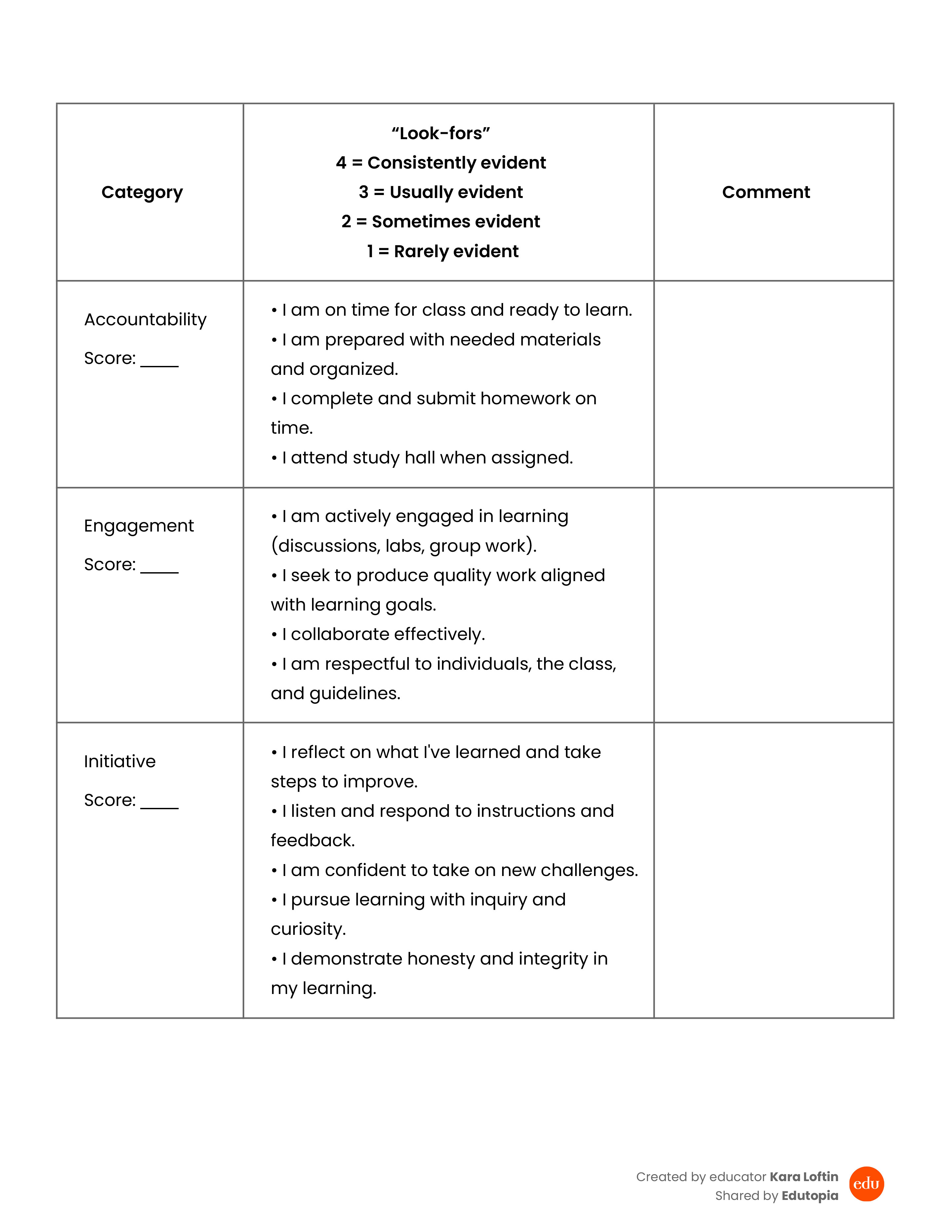
Typically, these academic and executive skills are tied into one single grade (e.g., 10 percent off for late homework). Habits of Work are defined as the accountability, initiative, and engagement behaviors that allow students to take purposeful action in their own learning. Teachers use the rubric to identify executive function gaps early and, when needed, consult with academic coaches for targeted strategies.
Coaches intentionally use students’ everyday assignments and classroom tasks as the basis for the intervention, instead of isolated skill drills. Portable coping strategies practiced in authentic contexts are more likely to produce durable and generalizable gains. Left unaddressed, executive function gaps may compound over time into learned helplessness, lower grades, and strained relationships with adults and peers too.
But these challenges are not fixed traits. Explicit, individualized instruction, paired with a unified classroom approach like Habits of Work to extend that support beyond a single coaching relationship, can provide the scaffolding needed to help students with ADHD, or any student with executive functioning challenges, build the self-regulation skills that carry them toward independence.