Facilitating ‘Risky’ Play in Preschool
Going a little beyond what they already know how to do helps children test their abilities, problem-solve, and build confidence.
Your content has been saved!
Go to My Saved Content.What’s your personal tolerance for allowing young children to take risks?
For many early childhood educators, risk tolerance is fairly low. The primary goal of childcare is to ensure children’s safety and well-being. However, risk-taking is essential to learning. Those familiar with Lev Vygotsky’s Zone of Proximal Development know that learning only happens when a child is challenged to go beyond what they already know how to do.
Risk-Taking Supports Social and Emotional Growth
Accepting these challenges builds resilience as children persist through failure to problem-solve and make additional attempts. At the same time, managing disappointment and practicing flexible thinking helps children gain self-regulation skills and, eventually, confidence in their own abilities to take on additional challenges. If risk-taking involves peers, such as when multiple children balance on a seesaw or try to go up a slide while others are trying to go down, it provides children with opportunities to practice social and emotional skills like perspective taking and setting boundaries.
In Vygotsky’s view, the adult’s role is to scaffold the challenge to make growth reachable for the child. When preschool teachers allow for physical risk-taking in nature or in the outdoor schoolyard, they assist young children in the development of critical skills that support later academic success.
Viewed through this lens, scaffolding risky play does not equate to letting children follow every impulse and simply praying that nothing bad happens. Nor is risky play the same thing as dangerous play. Risky play allows children to stretch their skills under the supervision of adults who understand the environment and the capabilities of each child and take adequate measures for children to safely experience them. It may be better understood as scaffolding adventure play for learning and growth.
8 Types of Beneficial Adventure Play
Professors Milena Masseretti, Ellen Beate Hansen Sandseter, and Michela Schenetti identified the following eight areas of adventure play that provide benefits to children. In my experience, I have seen how the forest environment at Wildwood Nature School, with trees to climb, uneven terrain to master, and lots of places for children to feel like they are hidden from adult oversight builds confidence and independence. But teachers can support these adventures in any classroom environment.
1. Provide ways for children to reach great heights. Climbing trees or clambering to the top of the slide are good examples of this. Since great height is relative, a Pikler triangle or other small climbing structure can be a “great height” for a toddler. You can mitigate risk by starting with balance beams or logs that are low to the ground and reachable by supervising adults. Work up to greater challenges as the children—and adults—are ready.
2. Provide ways for children to play at high speeds. Running down a steep hill or riding on scooters is an easy and fun activity. This type of adventure play can be mitigated with helmets and pads, or by defining a specific location for the adventure to occur. For example, allow preschool students to run down grass-covered hills only, and not on cement or asphalt.
3. Provide access to real tools. You can start with low-risk tools like rakes, sandpaper, or vegetable peelers and save other woodworking tools for times when volunteers can provide additional supervision.
4. Allow play with “dangerous” elements. Licensing and insurance regulations may not allow for campfires, but other natural elements are available to early childhood programs. Let children play outside in the rain or use their boots to slide on a frozen puddle.
5. Make space for rough-and-tumble play. Bear cub wrestling is an excellent way to practice parameter setting. Teachers can moderate as a group of children sets boundaries for this type of play and agrees upon signals to tell friends when to pull back or stop altogether.
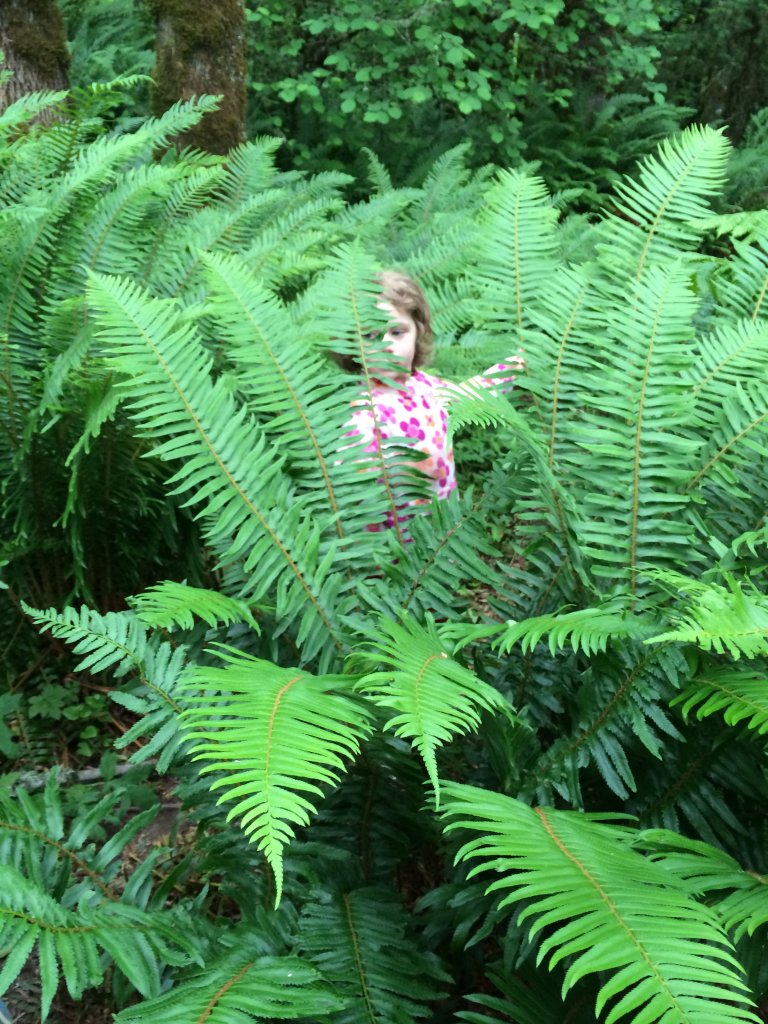
6. Provide places for children to get lost. No teacher wants to lose sight and sound of the children they’re supervising, but this type of play is actually about letting kids feel free to explore on their own without adult intervention. There are many ways to create safe places for children to hide using intentional landscaping within a fenced area or other boundary markers, with camp tents set up inside that children are allowed to zip closed, or through a game of hide-and-seek with peers.
7. Let children experiment with impact. One of my own children’s favorite games was to set up a beanbag chair at one end of the hallway, then take a running start from the opposite end and fling themselves into the beanbag chair. Only the chair ever got seriously injured. Jumping off play structures onto the mulch below, raking leaf piles to jump into in autumn, or tumbling on a mat are three ways to safely experiment with impact.
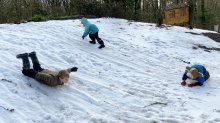
8. Recognize that vicarious play can be a form of risk-taking. Sometimes it’s thrilling just to watch others take risks. When it snows at our preschool, penguin sliding, where children propel themselves downhill on their bellies, combines a number of risky play elements. When the conditions are right, repeated sliding creates the risky elements of an icy surface and higher speeds. Some children take a running start to launch themselves onto the hill, further increasing their speed and generating an impact. Every year, there’s at least one child who stands at the top of the hill, with a big grin on their face, never joining in, narrating what the other children are doing, laughing, and having the time of their life. For children hesitant to take risks, vicarious play offers a way for them to get comfortable with challenges by seeing others emerge safely.
Given the benefits of adventure play for physical, social, and cognitive development, it’s crucial that early childhood educators find ways to support it. Starting small with risks that are easy to manage or mitigate can often build your comfort levels until you’re ready to allow more adventure play that challenges children to increase their capabilities.